Phone:
(701)814-6992
Physical address:
6296 Donnelly Plaza
Ratkeville, Bahamas.

Phone:
(701)814-6992
Physical address:
6296 Donnelly Plaza
Ratkeville, Bahamas.
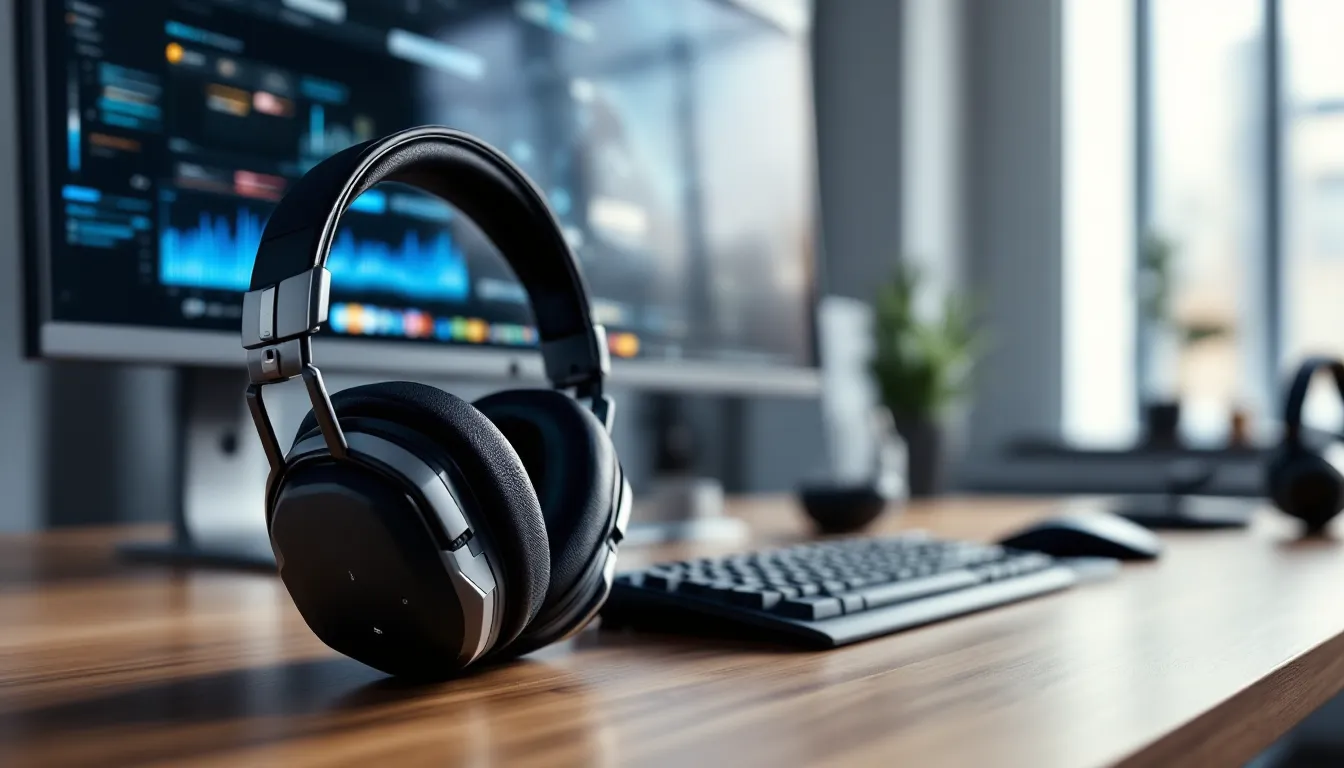
Sennheiser isn’t a name that needs much introduction to audiophiles, but when it comes to wireless gaming headsets, the German audio giant brings something distinct to the table. While most gaming brands chase RGB lighting and aggressive aesthetics, Sennheiser’s approach centers on what actually matters during a heated ranked match: crystal-clear audio, rock-solid wireless connectivity, and build quality that survives years of desk slams.
In 2026, the wireless gaming headset market is more crowded than ever. But if you’re tired of muddy audio, flimsy hinges, and batteries that die mid-raid, Sennheiser’s lineup deserves serious consideration. This guide breaks down everything you need to know about Sennheiser wireless gaming headsets, from flagship models to platform compatibility, competitive advantages, and whether the premium price tag actually translates to better performance.
Sennheiser’s been in the audio game since 1945, and that eight-decade head start shows. Their studio-grade headphones are the reference standard for audio engineers worldwide, meaning when they design a gaming headset, they’re not guessing at frequency response curves or throwing in fake surround sound gimmicks.
The company’s transducer technology is where the difference lives. Sennheiser drivers are engineered for accuracy across the frequency spectrum, which translates to hearing footsteps in Counter-Strike 2 exactly where they’re supposed to be, or catching that distant engine rev in Forza Motorsport before your opponent appears on screen. Most gaming brands license audio tech or slap “7.1 surround” on mediocre drivers. Sennheiser builds from the ground up.
Wireless gaming used to mean compromise, latency, worse audio quality, constant charging anxiety. Not anymore. Modern wireless tech, especially low-latency 2.4GHz dongles, has closed the gap to where even competitive players can’t reliably distinguish wired from wireless in blind tests.
The practical benefits are obvious: no cable snags during tense moments, freedom to grab a drink without removing your headset, and cleaner desk aesthetics. For streamers, wireless eliminates one more cable in an already chaotic setup. Battery tech has also improved dramatically, many current Sennheiser models push 20+ hours on a single charge, enough for marathon weekend sessions without hunting for a charging cable.
The GSP 670 remains Sennheiser’s flagship wireless gaming headset in 2026, and it’s aged remarkably well since its launch. This is the model that puts Sennheiser’s philosophy on full display: premium audio first, gaming features second, gamer aesthetics last.
Key specs:
The GSP 670’s audio profile is neutral by gaming headset standards, which sounds boring until you realize that’s exactly what competitive players want. No bass boost masking footsteps, no artificial treble spike fatiguing your ears after two hours. Just clean, accurate sound that lets you make the calls that matter.
The dual connectivity is genuinely useful, not a gimmick. You can stay connected to your PC via dongle while simultaneously paired to your phone via Bluetooth, so Discord calls or Spotify don’t interrupt your game audio. The transition is seamless, and latency on the dongle connection stays under 20ms, well below perceptible thresholds.
After Sennheiser’s gaming division spun off into EPOS (then reintegrated elements back), the EPOS H3PRO Hybrid represents the evolution of Sennheiser’s wireless philosophy. It’s lighter than the GSP 670, more portable, and designed for multi-platform flexibility.
Key specs:
The H3PRO Hybrid’s absurd battery life is its killer feature. Nearly 40 hours means you’re charging weekly, not nightly. The passive mode is a smart safety net, if you somehow drain the battery mid-session, plug in a 3.5mm cable and keep playing.
Audio quality sits slightly below the GSP 670 in terms of raw clarity, but the comfort advantage is real. The memory foam earcups and reduced clamping force make this the better choice for 8+ hour sessions. Independent headset comparison testing has consistently rated EPOS models highly for extended comfort without sacrificing audio fidelity.
The Sennheiser Game One is legendary in gaming communities, open-back design, exceptional soundstage, and a price point that made premium audio accessible. But it’s wired, and in 2026, that matters.
Here’s the honest comparison: the Game One still has a wider soundstage due to its open-back design, which wireless headsets can’t replicate (closed-back is necessary for wireless to avoid bleeding external noise). For single-player immersion in games like Elden Ring or Baldur’s Gate 3, the Game One’s spatial audio is unmatched in Sennheiser’s lineup.
But for competitive multiplayer? The GSP 670 or H3PRO Hybrid win on practicality. The latency-free wireless, better isolation, and flexibility outweigh the marginal soundstage advantage. If you already own a Game One and love it, there’s no urgent reason to switch. But if you’re buying new in 2026, wireless makes more sense for most gaming scenarios.
Sennheiser approaches surround sound differently than most gaming brands. You won’t find marketing about “12-dimensional spatial audio” or proprietary surround algorithms. Instead, Sennheiser headsets use DTS Headphone:X 2.0 or Dolby Atmos for Headphones, industry-standard implementations that work across multiple games and platforms.
The important distinction: Sennheiser’s stereo imaging is strong enough that virtual surround often isn’t necessary. Their driver positioning and acoustic design already provide excellent directional cues in stereo mode. In competitive shooters like Valorant or CS2, many players disable surround entirely and rely on Sennheiser’s natural stereo separation.
Frequency response typically sits around 10Hz–23kHz, which covers the full range of game audio. The bass extension handles explosions and vehicle rumble without bleeding into mids where footsteps and voice comms live.
Battery life separates usable wireless headsets from desk decorations. Sennheiser’s current lineup ranges from 16 hours (GSP 670 with dual connectivity active) to 38 hours (H3PRO Hybrid on dongle only).
Charging is typically USB-C, with full charge times around 3-4 hours. Most models support charge-while-playing via the included USB cable, so even if you forget to charge overnight, a 15-minute plug-in during a queue break gets you another few hours.
Battery degradation is real. After 2-3 years of daily use, expect capacity to drop 20-30%. This is lithium-ion physics, not a Sennheiser-specific issue. The H3PRO Hybrid’s passive wired mode becomes more valuable as the battery ages.
Gaming headset microphones are usually trash. Sennheiser’s are not.
The GSP 670 uses a broadcast-quality boom mic with frequency response optimized for voice (50Hz–16kHz) and excellent noise rejection. Your teammates hear you clearly without background keyboard clatter or case fan whine. The flip-to-mute mechanism is mechanical, lift the boom, audio cuts. No fumbling for mute buttons during critical moments.
The H3PRO Hybrid uses a slightly less premium mic but still outperforms 90% of gaming headsets. It’s Discord-certified, which actually means something, consistent performance in voice chat applications without driver weirdness.
Neither will replace a dedicated XLR mic for streaming, but for in-game comms and casual Discord, they’re excellent.
Sennheiser builds headsets like German engineering stereotypes suggest: over-engineered, slightly heavy, and unlikely to break. The GSP 670 weighs 398g, which sounds like a lot until you realize the weight distribution is so good you stop noticing after 20 minutes.
Earcup materials lean toward memory foam with velour or leatherette options depending on the model. Velour breathes better for long sessions but wears faster. Leatherette isolates noise better but can get warm in summer.
Clamping force is adjustable via the metal headband. Out of the box, it’s moderate, secure enough for head movement without feeling like a vice. The hinges and adjustment mechanisms are metal, not plastic. These headsets survive years of daily use without developing the creaks and wobbles that plague cheaper models.
Latency is the delay between an action on-screen and when you hear the corresponding audio. For gaming, perceptible latency starts around 30-40ms. Anything above that creates a noticeable disconnect that ruins competitive play.
Bluetooth typically runs 100-200ms latency with standard codecs. That’s fine for music or single-player games where you’re not relying on audio cues for reaction time. It’s unusable for competitive multiplayer.
2.4GHz USB dongles operate on a different principle, dedicated wireless connection, minimal processing overhead, latency typically under 20ms. This is what Sennheiser uses for gaming mode, and it’s why the GSP 670 and H3PRO Hybrid feel identical to wired for actual gameplay.
Bluetooth Low Energy (BLE) audio codecs like LC3 in Bluetooth 5.2+ have improved latency, but as of 2026, they still can’t match dedicated gaming dongles. Comprehensive peripheral testing consistently shows 2.4GHz dongles maintaining sub-20ms latency even in congested wireless environments.
Dual connectivity means simultaneous connections, one for gaming (2.4GHz dongle), one for mobile or secondary device (Bluetooth). This isn’t just marketing.
Practical use case: You’re in a ranked Apex Legends match (dongle connection, sub-20ms latency). Your Discord server starts a voice channel on your phone (Bluetooth connection). Both audio streams mix automatically without interrupting your game audio or requiring you to switch inputs.
The GSP 670 and H3PRO Hybrid both handle this cleanly, with independent volume controls for each connection. The dongle always takes priority, if both connections are active and you need to hear footsteps, game audio stays clear while mobile audio ducks slightly.
It’s a feature that sounds gimmicky until you use it, then you wonder how you lived without it.
PC is where Sennheiser wireless headsets show their full potential. Plug in the USB dongle, install the Sennheiser Gaming Suite software, and you’ve got access to EQ customization, microphone monitoring, RGB control (where applicable), and firmware updates.
The software isn’t flashy, but it’s functional. You can save multiple EQ profiles for different games, bass-heavy for Battlefield, neutral for CS2, enhanced mids for World of Warcraft voice comms. Profile switching can be manual or automatic based on which executable is running.
Sidetone (microphone monitoring) is adjustable, which matters more than people realize. Hearing your own voice prevents the “shouting because you can’t hear yourself” problem common in closed-back headsets.
Compatibility is universal. Windows 10/11, SteamOS on Steam Deck, even Linux with basic driver support. The dongle shows up as a standard audio device, so troubleshooting is minimal.
Console compatibility gets complicated because Sony and Microsoft both have their own wireless standards and restrictions.
PlayStation 4/5: Sennheiser’s USB dongles work natively. Plug into any USB port, the console recognizes it as a wireless audio device, done. Full audio, microphone, and 3D audio support (on PS5). No adapter needed.
Xbox Series X/S: More complicated. Microsoft restricts wireless audio to their proprietary protocol. Sennheiser headsets work on Xbox via the included 3.5mm cable plugged into the controller, but you lose wireless. The H3PRO Hybrid’s passive mode makes this less painful, but it’s still frustrating.
Some third-party adapters claim to enable Sennheiser dongle compatibility on Xbox, but results are inconsistent. If Xbox is your primary platform, consider whether losing wireless is acceptable or if you’d rather look at Xbox Wireless-certified alternatives.
Mobile and Switch gaming lean heavily on Bluetooth since neither platform officially supports USB dongles (Switch requires a dock for USB audio, which defeats portability).
Sennheiser’s Bluetooth implementation is solid for these use cases. Latency isn’t competitive-tier, but for mobile games or Switch titles like Animal Crossing or Zelda, the 100ms delay is imperceptible. Battery life on Bluetooth mode is often longer than dongle mode since the wireless protocol is less power-hungry.
The H3PRO Hybrid especially shines here, USB-C dongle works with Switch dock, Bluetooth works handheld, and passive mode is a backup. It’s the most versatile option if you’re gaming across multiple platforms.
Current gaming accessory reviews consistently highlight platform flexibility as a key consideration for 2026, where gamers rarely stick to a single ecosystem.
In competitive esports, audio isn’t about immersion, it’s about information. Knowing an enemy’s position 0.5 seconds earlier can be the difference between a round win and elimination.
Sennheiser’s neutral frequency response and accurate stereo imaging provide that edge. In Valorant, CS2, or Rainbow Six Siege, you need to distinguish between footsteps above, below, left, or right, often through walls or floors. The GSP 670’s driver accuracy translates directional cues without the muddiness that plagues bass-boosted gaming headsets.
Many pro players still prefer wired setups in tournaments due to venue wireless interference, but for practice and ranked play at home, Sennheiser’s dongle connection is tournament-grade. The sub-20ms latency is indistinguishable from wired in controlled testing.
One underrated aspect: consistency. Sennheiser headsets sound the same hour one and hour eight. No driver distortion, no frequency shift as components warm up. When you’re grinding ranked for 10 hours straight, that consistency matters.
Tournament organizers often restrict wireless peripherals due to interference concerns, but Sennheiser’s build quality and passive modes make their headsets viable even in restricted scenarios.
The GSP 670’s microphone is Discord and TeamSpeak certified, but more importantly, it’s consistent. No driver conflicts, no sudden volume drops, no mystery mutes. During a crucial League of Legends team fight, your shotcaller needs to be heard, not troubleshooting audio.
Durability is equally critical. Sennheiser headsets survive the travel abuse that comes with LAN events. The carrying cases are adequate, the hinges don’t snap in backpacks, and the cables don’t fray after a dozen pack-unpack cycles.
If you’re competing at a level where prize money is involved, the premium Sennheiser charges becomes an investment, not an expense.
Out-of-the-box audio is excellent, but custom EQ can tailor Sennheiser headsets to specific game genres.
Competitive FPS (CS2, Valorant, Apex Legends):
Battle Royale (Warzone, PUBG, Fortnite):
RPG/Single-Player (Baldur’s Gate 3, Elden Ring, God of War):
MOBA (League of Legends, Dota 2):
The Sennheiser Gaming Suite allows saving these profiles with one-click switching.
Firmware updates aren’t exciting, but they’re essential. Sennheiser periodically releases updates that improve battery management, fix connectivity bugs, and occasionally add features.
Check for updates monthly via the Sennheiser Gaming Suite. The process takes 5-10 minutes and requires the headset to stay connected via USB. Don’t skip these, the difference between launch firmware and current 2026 firmware on the GSP 670 includes improved Bluetooth codec support and better dongle range.
The software also includes diagnostic tools. If you’re experiencing intermittent dropouts or weird audio behavior, the suite can identify if it’s a hardware issue (RMA time) or interference from other devices (fix by changing dongle USB port or wireless channel).
Sennheiser headsets are built to last, but basic maintenance extends their lifespan:
Weekly:
Monthly:
As needed:
Storage matters too. When not in use, hang the headset or lay it flat, don’t leave it stretched over a narrow monitor stand. The headband can develop stress points that eventually crack.
Sennheiser doesn’t exist in a vacuum. In 2026, brands like SteelSeries, Audeze, and HyperX offer serious wireless competition.
SteelSeries Arctis Nova Pro Wireless: Direct competitor to the GSP 670. Similar price point ($350-$380), slightly better software (SteelSeries GG is more polished), swappable battery system is convenient. Audio quality is close but Sennheiser edges ahead in midrange clarity. Arctis is more comfortable for most users but feels less premium in build.
Audeze Maxwell: The new heavyweight ($329). Planar magnetic drivers deliver audiophile-grade sound that technically outperforms Sennheiser’s dynamic drivers. But it’s heavier (490g), more expensive, and overkill unless you’re also using it for music production. If pure audio fidelity is the only metric, Maxwell wins. For balanced gaming performance, Sennheiser is more practical.
HyperX Cloud III Wireless: Budget-friendly ($149-$179) with solid performance. Can’t match Sennheiser’s audio accuracy or build quality, but costs half as much. If you’re price-sensitive and play casually, HyperX makes sense. If you’re investing for 3+ years of daily use, Sennheiser’s durability justifies the premium.
Logitech G Pro X Wireless: Popular in esports (around $250). Lighter than Sennheiser, excellent for competitive FPS, but the audio profile is more colored (boosted for gaming-specific frequencies). Sennheiser’s neutrality is better for mixed use (gaming + music + movies).
The honest take: Sennheiser sits in the upper-mid to premium tier. You’re paying for audio engineering heritage and build quality. If those aren’t priorities, cheaper options perform well enough. But if you want a headset that sounds as good in year three as year one, Sennheiser delivers.
Let’s talk numbers. The GSP 670 hovers around $329-$349 in 2026. The H3PRO Hybrid sits at $229-$249. These aren’t impulse purchases.
What you’re paying for:
Audio engineering: Sennheiser’s driver tech and acoustic design cost more to develop and manufacture. The frequency response accuracy isn’t an accident, it’s years of R&D.
Build quality: Metal components, reinforced cables, quality earcup materials. Budget headsets use plastic and foam that degrades in 18 months. Sennheiser headsets routinely last 3-5 years of daily use.
Warranty and support: Sennheiser’s two-year warranty is standard, but their customer service reputation in 2026 is solid. RMA processes are straightforward, and replacement parts are available instead of forcing full unit replacement.
Software longevity: The Gaming Suite receives updates for products 5+ years old. You’re not orphaned six months after purchase.
The break-even math: If you buy a $100 gaming headset every 18 months (typical lifespan), you spend $333 over five years. A $330 Sennheiser lasting five years costs the same, but you get better audio every single day.
The caveat: If you’re rough on gear, lose things frequently, or prefer upgrading every year to chase the latest tech, Sennheiser’s premium isn’t justified. But for most gamers who take reasonable care of their equipment, the value proposition holds.
Is it worth it? If you game 10+ hours weekly, communicate regularly in team games, and care about audio quality beyond “can I hear footsteps,” yes. If you game casually a few hours per week, probably not, mid-tier options will serve you fine.
Sennheiser wireless gaming headsets aren’t for everyone, and that’s fine. They’re engineered for gamers who recognize that audio quality affects performance, that comfort matters during long sessions, and that buying once and using for years beats replacing gear annually.
The GSP 670 remains the flagship choice for those wanting the absolute best Sennheiser offers. The H3PRO Hybrid is the versatile option for multi-platform gamers who prioritize battery life and portability. Both deliver the audio accuracy and build quality that define Sennheiser’s approach.
If you’ve been tolerating mediocre audio from budget headsets and wondering whether premium gear makes a difference, it does. The question isn’t whether Sennheiser wireless gaming headsets are good. They objectively are. The question is whether that level of performance matters enough to you to justify the investment. For competitive players, dedicated enthusiasts, and anyone who’s ever lost a round because they couldn’t quite place that footstep, the answer is clear.
