Phone:
(701)814-6992
Physical address:
6296 Donnelly Plaza
Ratkeville, Bahamas.
Phone:
(701)814-6992
Physical address:
6296 Donnelly Plaza
Ratkeville, Bahamas.
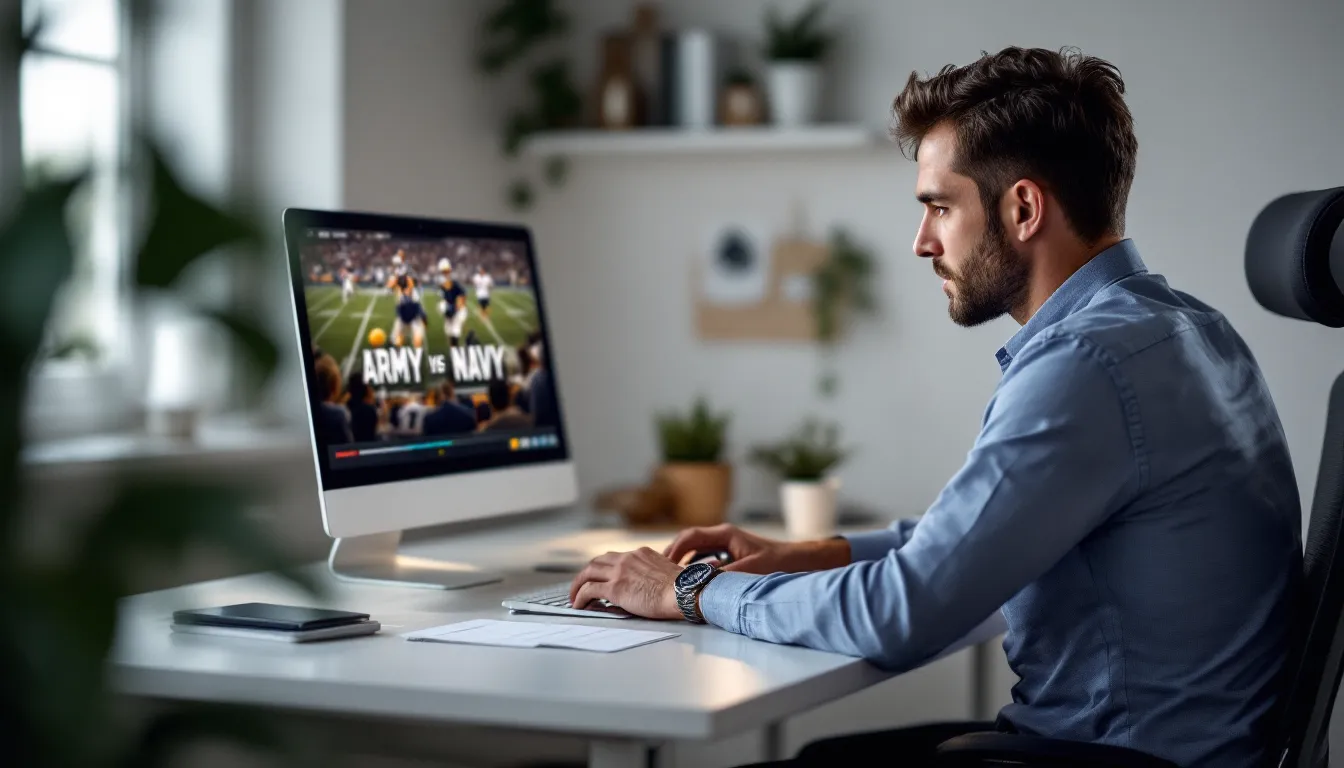
The Army-Navy game isn’t just another football matchup, it’s a century-old tradition, a military rivalry steeped in honor, and one of the few sporting events that draws viewers from every corner of gaming and streaming culture. Whether you’re a die-hard college football fan, a casual viewer who tunes in for the spectacle, or someone who just appreciates a well-executed stream setup, getting access to this game is easier than ever in 2026. But with streaming services fragmenting faster than a battle royale lobby, knowing exactly where and how to watch can save you from last-minute scrambling. This guide breaks down every streaming option, device setup, troubleshooting hack, and optimization tip you’ll need to catch every play without lag, buffering, or blackout frustrations.
The Army-Navy Game is an annual college football showdown between the United States Military Academy (Army Black Knights) and the United States Naval Academy (Navy Midshipmen). Dating back to 1890, it’s one of the oldest and most storied rivalries in American sports.
What makes it unique is the context. These aren’t just student-athletes playing for scholarships, they’re future military officers competing for service pride. The pageantry, the flyovers, the march-ons, and the post-game tradition where the winning team’s alma mater is sung by both academies create an atmosphere unlike any other sporting event.
For gamers and streamers, the Army-Navy game has become a cultural touchstone, especially with the rise of watch parties, co-streams, and esports personalities engaging with traditional sports. The game typically airs in mid-December, making it a marquee event during the quieter stretch of the gaming calendar before the holiday break. Whether you’re tuning in for the drama or just the memes, it’s a broadcast worth catching live.
The 2026 Army-Navy Game is scheduled for Saturday, December 12, 2026, with kickoff slated for 3:00 PM ET. The venue rotates annually, and this year’s game is set to take place at M&T Bank Stadium in Baltimore, Maryland, a neutral site that’s hosted the rivalry more than any other location.
CBS holds the exclusive broadcast rights through 2028, which means the game will air on CBS and stream via Paramount+. This is critical for planning your streaming setup, since you won’t find it on ESPN, Fox, or NBC.
If you’re trying to coordinate watch parties or schedule around other gaming commitments (LAN events, ranked grinds, tournament streams), mark the calendar early. The game traditionally runs about three and a half hours, so expect the broadcast to wrap around 6:30-7:00 PM ET.
Streaming options for the Army-Navy game have expanded significantly, but not all services carry CBS live in every market. Here’s the breakdown of where to watch, what it costs, and what catches to watch for.
Paramount+ is the most direct route to streaming the game legally. CBS migrated most of its live sports content to Paramount+ in recent years, and the Army-Navy game is no exception.
Paramount+ also offers a 7-day free trial for new users, which is perfect if you’re only interested in the Army-Navy game and don’t plan to keep the subscription. Just set a reminder to cancel before the trial ends.
One caveat: Live CBS access on Paramount+ depends on your local market. Most major metros have it, but rural or smaller markets may not. Check Paramount+’s website with your ZIP code before subscribing.
If you’re cutting the cord or already use a live TV streaming service, several platforms carry CBS live:
All three offer free trials (usually 7 days), making them viable short-term options if you’re willing to juggle trial periods. Just remember to cancel before auto-renewal.
If you’re in a CBS broadcast market, you can stream the game completely free using an over-the-air (OTA) antenna paired with a digital tuner. Many modern TVs have built-in tuners, and standalone USB tuners for PC cost $20-$40.
Alternatively, the CBS News app and CBS Sports app occasionally stream select CBS Sports content for free, though availability for the Army-Navy game isn’t guaranteed. Worth checking the day of the broadcast.
For international viewers or those outside CBS markets, free trials of Paramount+ or YouTube TV are the safest bet. Stack trials strategically: sign up a day or two before the game to maximize coverage for any pre-game content or analysis you want to catch.
Streaming platform compatibility varies, so knowing which devices support your chosen service is key to avoiding last-minute setup headaches.
Streaming on PC is the most flexible option. All major services, Paramount+, YouTube TV, Hulu + Live TV, and FuboTV, support browser-based streaming via Chrome, Edge, Firefox, and Safari.
Steps:
For PC gamers with dual monitors, this is ideal for keeping the game on one screen while grinding ranked or farming in another window. Just be mindful of bandwidth if you’re doing both simultaneously.
Most streaming guides for PC setups emphasize using wired ethernet over Wi-Fi for live sports to minimize latency and buffering. If you’re on Wi-Fi, prioritize the 5GHz band for better throughput.
All major streaming platforms offer native apps for iOS (iPhone, iPad) and Android devices.
Paramount+: Available on iOS 14+ and Android 8.0+. Supports picture-in-picture (PiP) mode on recent OS versions, letting you browse or message while the game plays in a floating window.
YouTube TV, Hulu, FuboTV: All support mobile streaming with offline DVR downloads (useful if you want to record and watch later without data usage).
Pro tip for mobile gamers: If you’re streaming on your phone while commuting or at a LAN event, download the game via DVR beforehand to avoid burning through mobile data. A three-hour stream in HD can eat 3-5GB.
Console and smart TV streaming is plug-and-play for most services.
Gaming Consoles:
|
S / Xbox One**: Same app availability via Microsoft Store.
Smart TVs:
Most Samsung, LG, Sony, and Vizio smart TVs from 2020 onward have Paramount+, YouTube TV, Hulu, and FuboTV apps pre-installed or available in their respective app stores.
If you’re using an older TV without smart features, a Roku, Fire TV Stick, Chromecast, or Apple TV ($30-$150) will give you full app access. Roku and Fire TV are the most budget-friendly, while Apple TV offers the cleanest interface and best 4K upscaling.
For console streamers running dual setups (console gaming + watching sports), running the stream on the console’s media app while gaming on a separate device is a solid move. Just note that Xbox and PlayStation streaming apps don’t support true background play, so you can’t game and stream the Army-Navy game on the same console simultaneously.
If you’re watching from outside the US, geo-restrictions will block most domestic streaming services. Here’s how to work around that.
A VPN (Virtual Private Network) masks your real IP address and routes your connection through a US server, tricking streaming platforms into thinking you’re watching from inside the country.
Recommended VPNs for streaming:
All three offer 30-day money-back guarantees, so you can subscribe, use it for the game, and refund if you’re only here for the Army-Navy broadcast.
Setup steps:
Heads-up: Some streaming services (especially YouTube TV) detect VPN usage and block playback. If this happens, disconnect, switch to a different US server, clear your browser cache, and retry. ExpressVPN and NordVPN update their server IPs frequently to stay ahead of detection.
Some countries have official broadcast partners for the Army-Navy game, which may be simpler (and legal) than using a VPN.
If no official broadcaster exists in your region, VPN + Paramount+ is your cleanest option. Many esports fans and streamers use VPNs year-round for accessing region-locked content, so the setup is familiar territory for most gaming audiences.
Even with a solid setup, streaming hiccups happen. Here’s how to diagnose and fix the most common problems.
Buffering is the enemy of live sports. If your stream keeps pausing to load, try these fixes:
If buffering persists on a 50+ Mbps connection, the issue is likely server-side (streaming platform overload). Not much you can do except wait or switch to a different service if you have a backup.
Audio out of sync? This happens when the video stream and audio track drift apart, often due to device processing lag.
Video pixelated or blurry? Usually a bandwidth issue. Lower your stream quality manually or upgrade your internet plan.
Stream freezing but audio continues? This points to a decoding issue. Update your streaming app or browser to the latest version. On smart TVs, uninstall and reinstall the app.
Getting the stream to work is one thing. Optimizing it for a smooth, high-quality experience is another.
Here’s the speed breakdown by stream quality:
These are per stream. If multiple people in your house are watching or gaming simultaneously, multiply accordingly. A household with two 1080p streams and a console downloading a patch needs 30+ Mbps to avoid slowdowns.
If you’re serious about streaming sports or gaming content, 50-100 Mbps plans are the sweet spot for most households. Gigabit plans are overkill unless you’re running a content creation setup or hosting LAN parties.
ISP tips:
Router placement: If you’re on Wi-Fi, place your router centrally and elevate it. Walls, floors, and metal objects degrade signal strength.
Device updates: Keep your streaming apps and device firmware updated. Platforms like Paramount+ push performance patches regularly, and outdated apps can cause crashes or quality drops.
Browser choice (PC): Chrome and Edge generally perform best for streaming, with better hardware acceleration support than Firefox or Safari. If you’re on a low-end laptop, Edge tends to be lighter on CPU usage.
Display settings: If you’re streaming to a 4K TV via a Fire Stick, Roku, or console, make sure HDMI mode is set to 2.0 or higher and HDR is enabled if supported. Some devices default to 1080p output even when capable of 4K.
Ad blockers: Disable them for streaming platforms. Ad blockers can interfere with video playback, especially on free tiers or services with pre-roll ads.
If streaming isn’t an option, or you just want a different angle on the action, there are solid alternatives.
Radio Broadcast: Westwood One typically handles national radio coverage for the Army-Navy game. Tune in via AM/FM in most markets, or stream through the Westwood One app or TuneIn Radio. Audio-only streams use minimal data, making this a lifesaver if you’re on limited mobile bandwidth.
Social Media Live Updates: Twitter (X), Reddit’s r/CFB, and ESPN’s live blog offer play-by-play text updates, highlight clips, and real-time reactions. Not as immersive as video, but perfect for following along during work or while gaming.
Watch Parties and Co-Streams: The rise of gaming and entertainment culture has led to more watch parties hosted by streamers and esports orgs on Twitch, YouTube, or Discord. Check your favorite personalities’ schedules, some host reaction streams or co-commentary, adding a layer of entertainment beyond the broadcast itself.
Highlights and VODs: If you can’t watch live, CBS Sports and Paramount+ typically post full game replays and condensed highlight reels within hours of the final whistle. YouTube channels and college football fan accounts also upload key moments (though these may get DMCA’d quickly).
In-Person Attendance: Tickets for the 2026 game at M&T Bank Stadium go on sale several months in advance through official military academy athletic sites and Ticketmaster. Prices range from $75 for upper deck to $300+ for premium seating. If you’re in the mid-Atlantic region and want the full experience, nothing beats being there live.
Streaming the 2026 Army-Navy game comes down to picking the right platform for your setup, optimizing your connection, and having a backup plan for when things go sideways. Whether you’re rolling with Paramount+, leveraging a free trial, or VPNing in from overseas, the options are there, you just need to lock them in before kickoff. Test your setup a day early, clear your schedule for 3:00 PM ET on December 12, and settle in for one of the best traditions in sports. And if your stream does buffer during a crucial fourth-down conversion, well, at least you’ve got this guide to troubleshoot it in under 30 seconds.
